Pet turf and dog runs in Henderson
No dust, no dirt tracked inside, no odour in August. Specified for dogs rather than sold as a lawn product.
No dust, no dirt tracked inside, no odour in August. Specified for dogs rather than sold as a lawn product.
In wetter climates the dog problem is mud. Here it is dust and bare dirt — a worn track along the block wall, decomposed granite carried inside on four paws, and grass that never had a chance where the dog runs.
Pet turf solves it, and a properly specified pet installation differs from a standard lawn in three ways that matter.
Standard turf backing is hole-punched at intervals. Pet backing drains across its whole surface at several times the rate. Urine has to move straight down rather than travelling sideways looking for a hole.
The single biggest factor in whether a pet area smells. Plain silica sand holds ammonia. Coated antimicrobial sand or zeolite captures and neutralises it. In a climate where surface temperatures hit 140 degrees, ammonia that is being held will make itself known. Infill options compared.
This is the desert-specific piece. Caliche does not let liquid through, so a pet area built on a standard base over shallow hardpan will hold everything that goes into it. We build a more open aggregate base and, where caliche is close to the surface, install drainage that carries liquid to an outlet rather than assuming the ground will take it.
Get this wrong and no infill choice saves you. More on caliche.
The honest concern in Henderson. Turf in full sun in July is hot, and dogs feel it the way they feel a driveway. Three things help: cooling-technology turf, which we recommend for any full-sun pet area; shade, whether a structure or planting; and a rinse before heavy use, which drops the surface temperature in seconds.
Dogs also self-regulate. They move off hot surfaces without being told. But a shaded, cooled pet area gets used far more than a fully exposed one, and it is worth designing for.
Solid waste picked up as normal. Liquid drains through. Rinse monthly in warm weather, enzymatic cleaner two or three times a year for heavy use. Power broom annually, since pet areas mat faster than lawns.
Turf is anchored at every edge with nothing loose to grip, and most dogs stop testing it within days. The turf is lead-free and pet infills are non-toxic. It also removes fertiliser and lawn chemicals from the yard entirely.
A dedicated run of around 200 square feet typically runs $1,800 to $3,400 installed. Pet backing and antimicrobial infill add modestly over a standard build and are not a place to economise. See pricing.
Most estimates are scheduled within 48 hours.
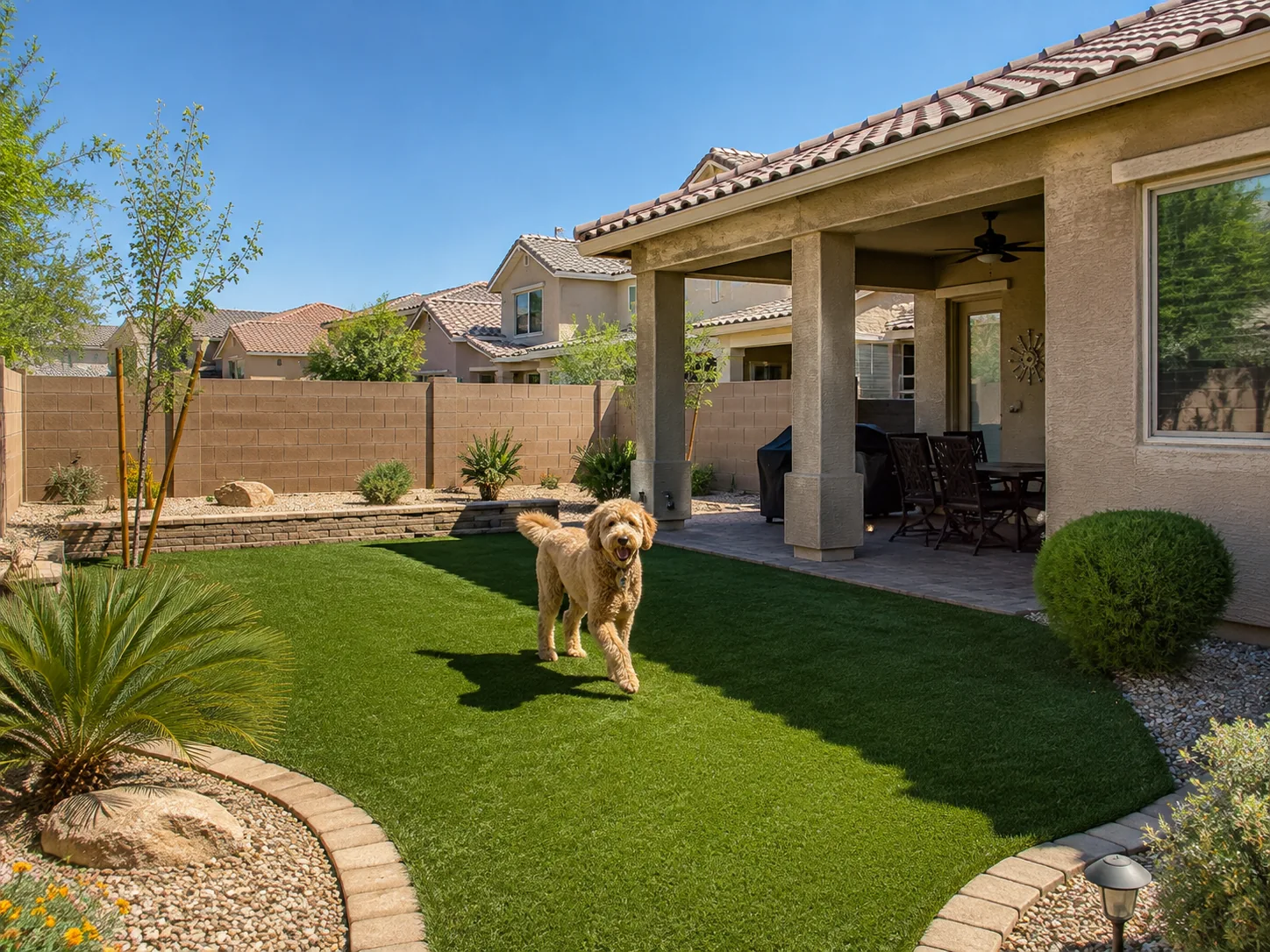
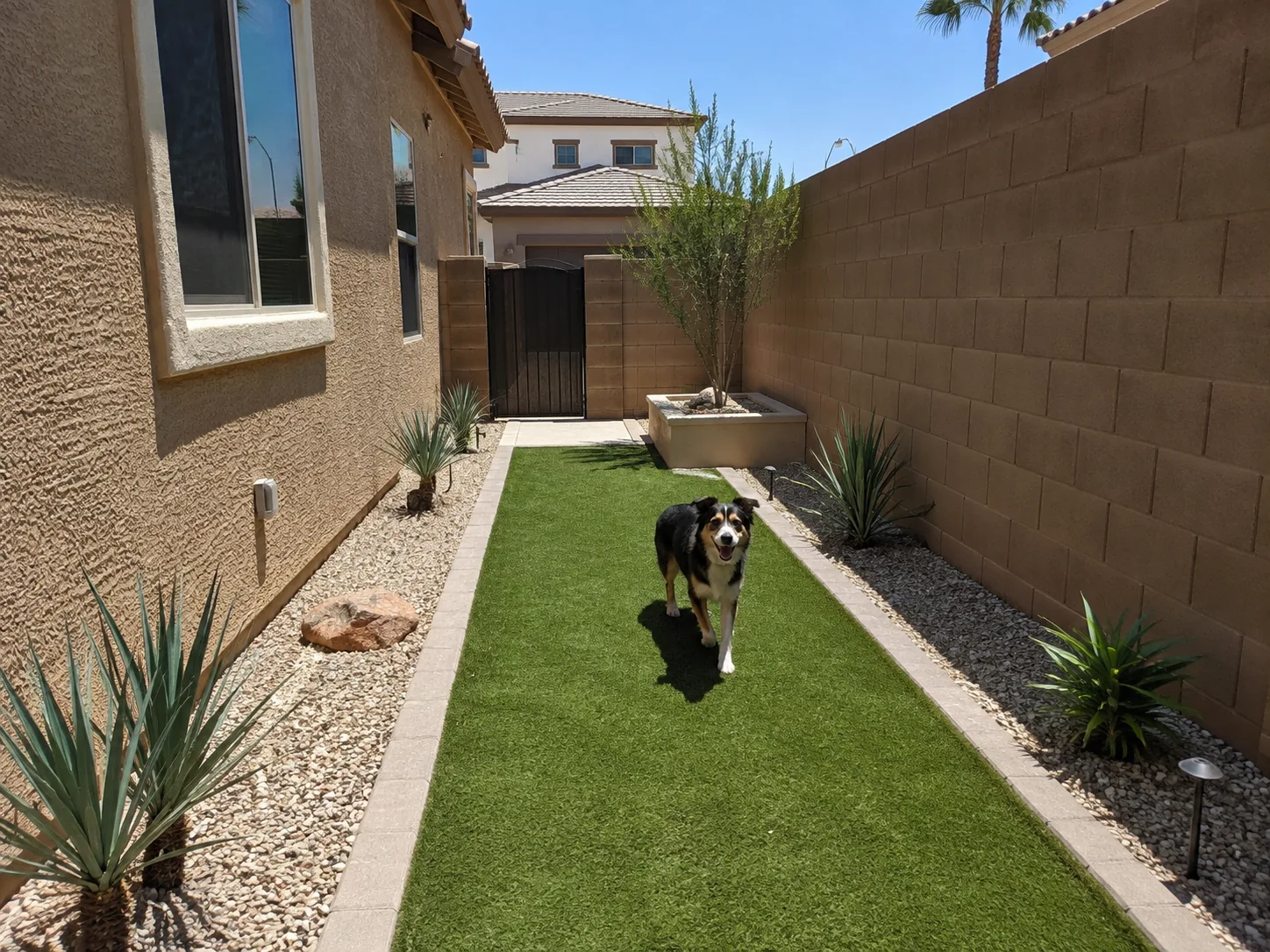
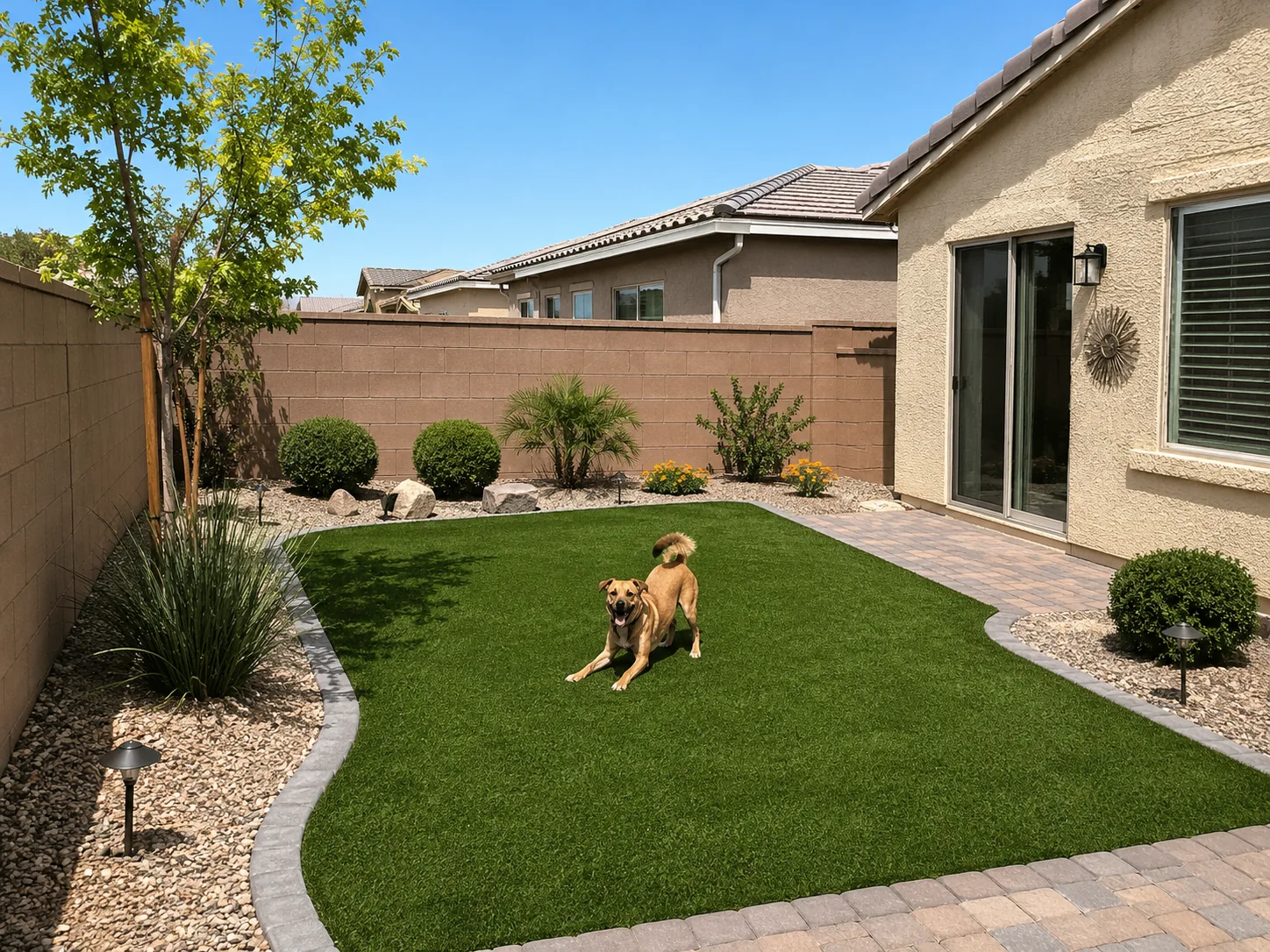
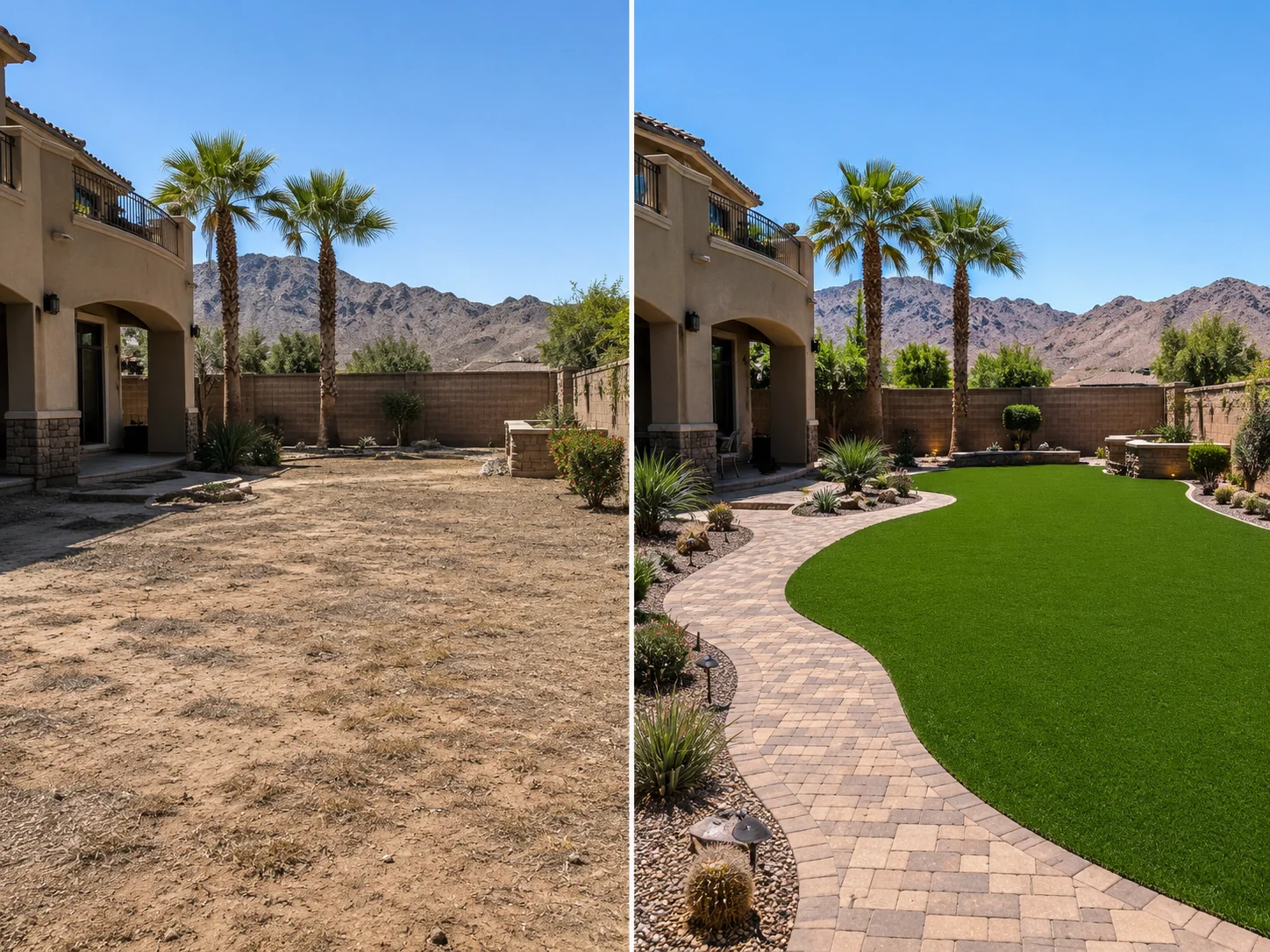
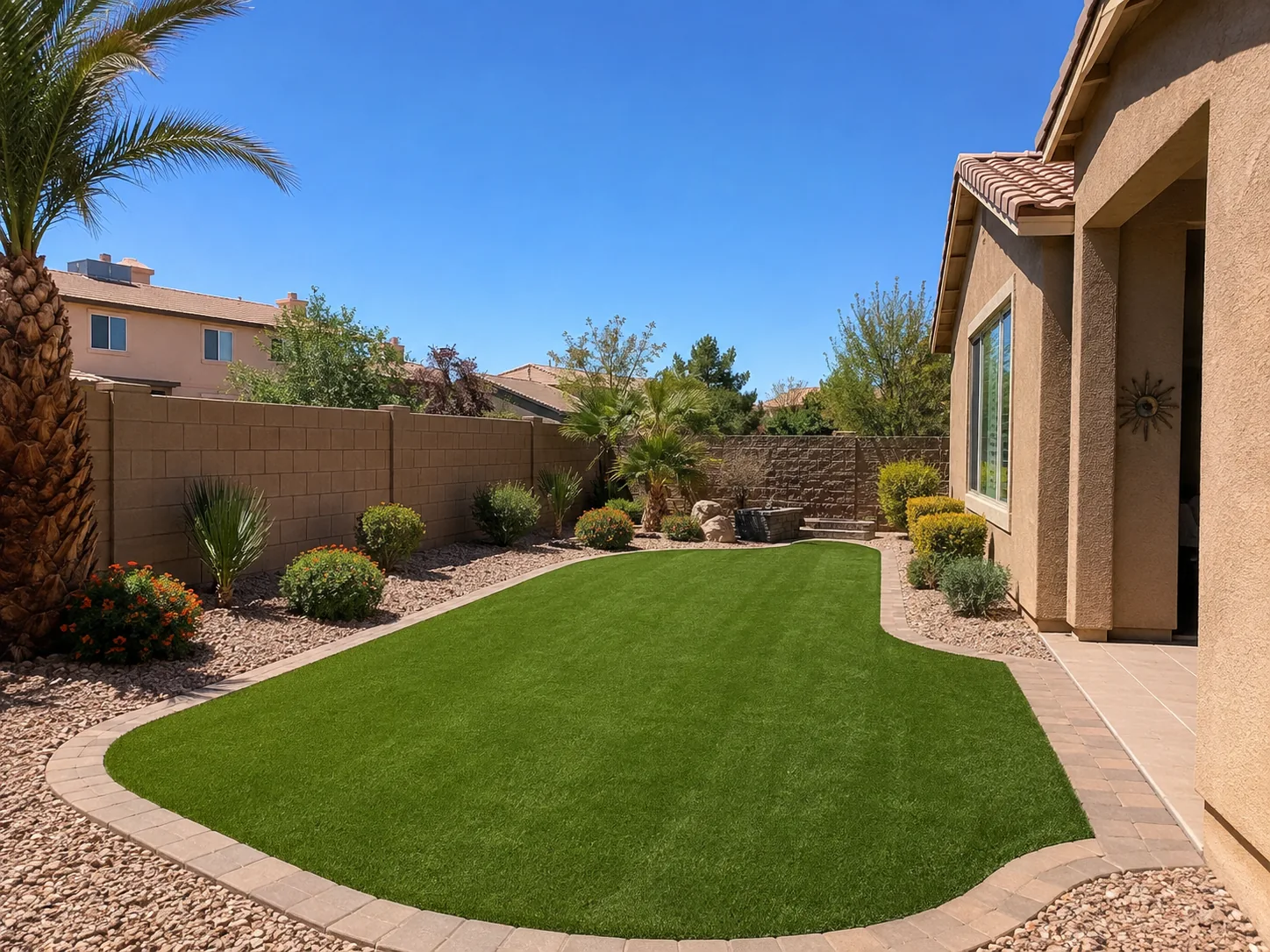
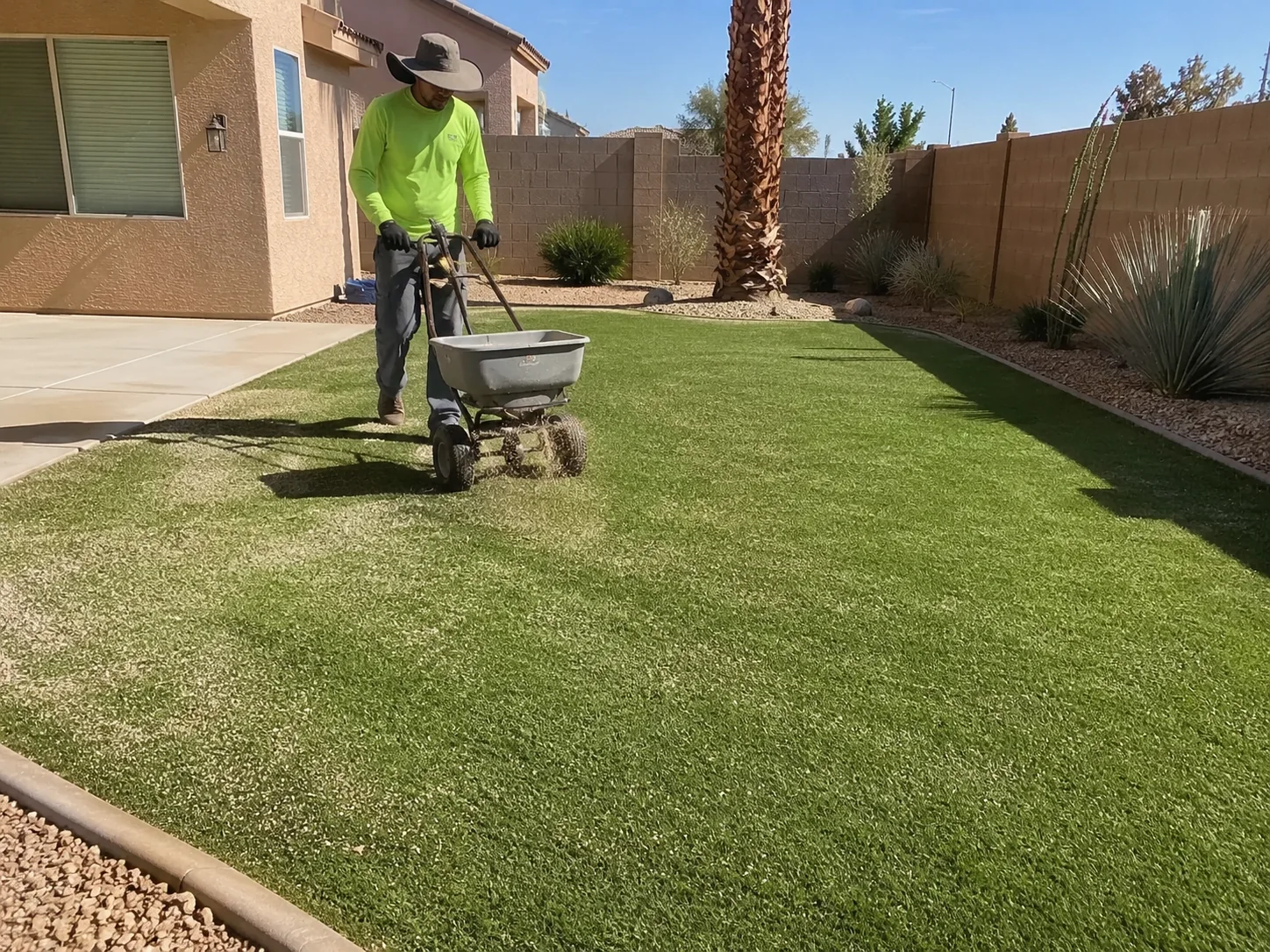
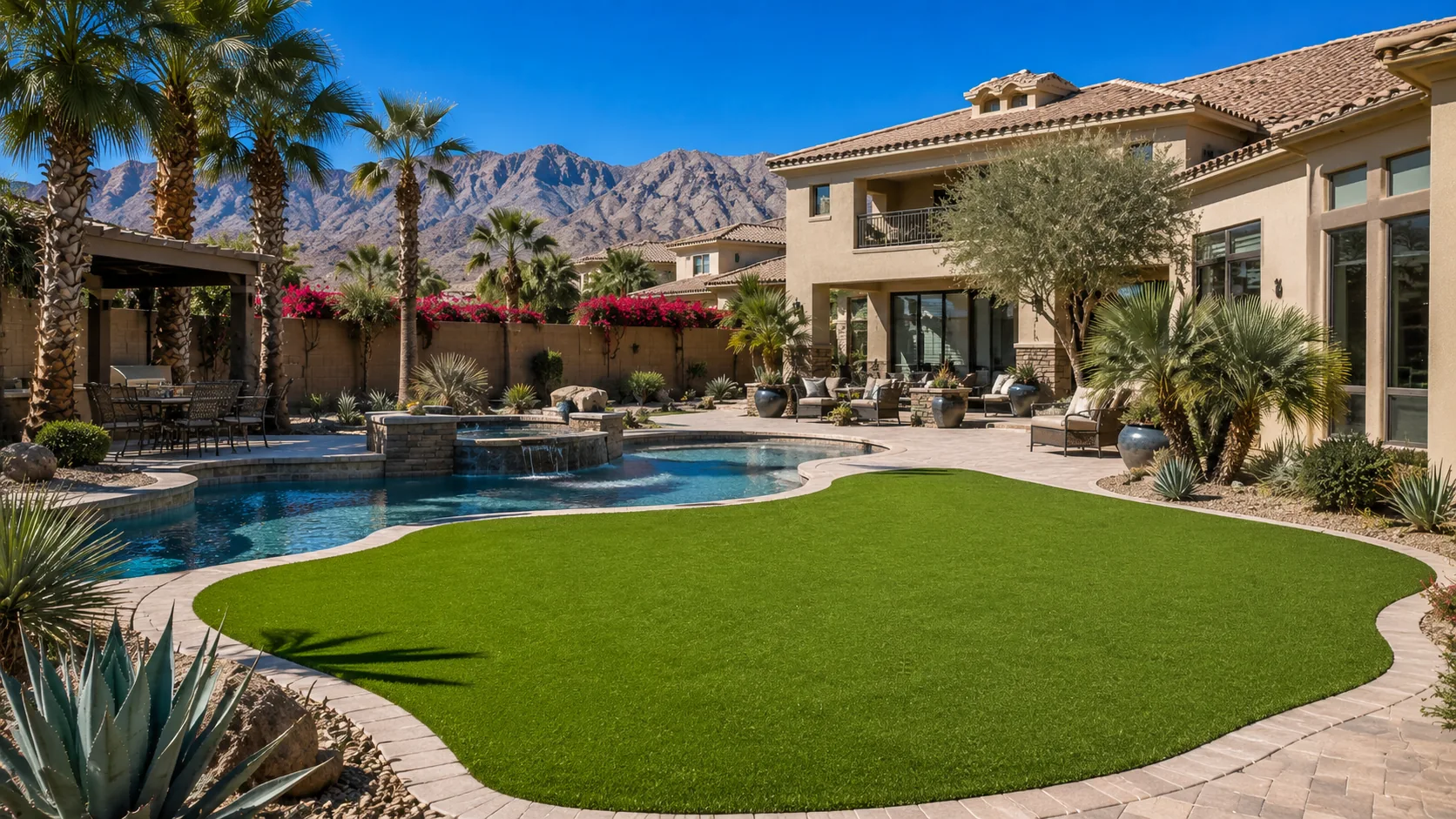
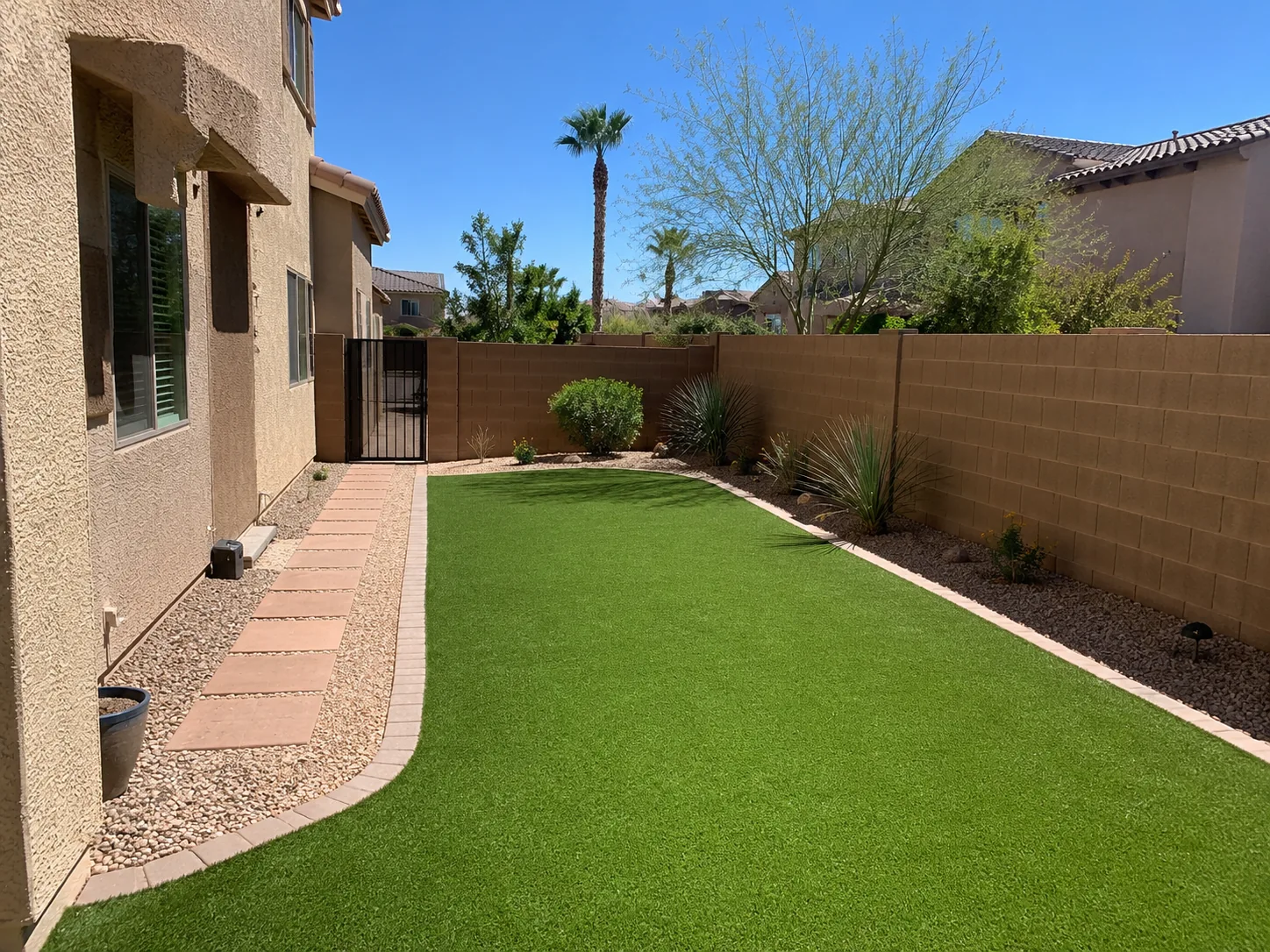
Images are representative of the work we do.
Tell us the space and we’ll give you a firm, written price. No pressure, no obligation.